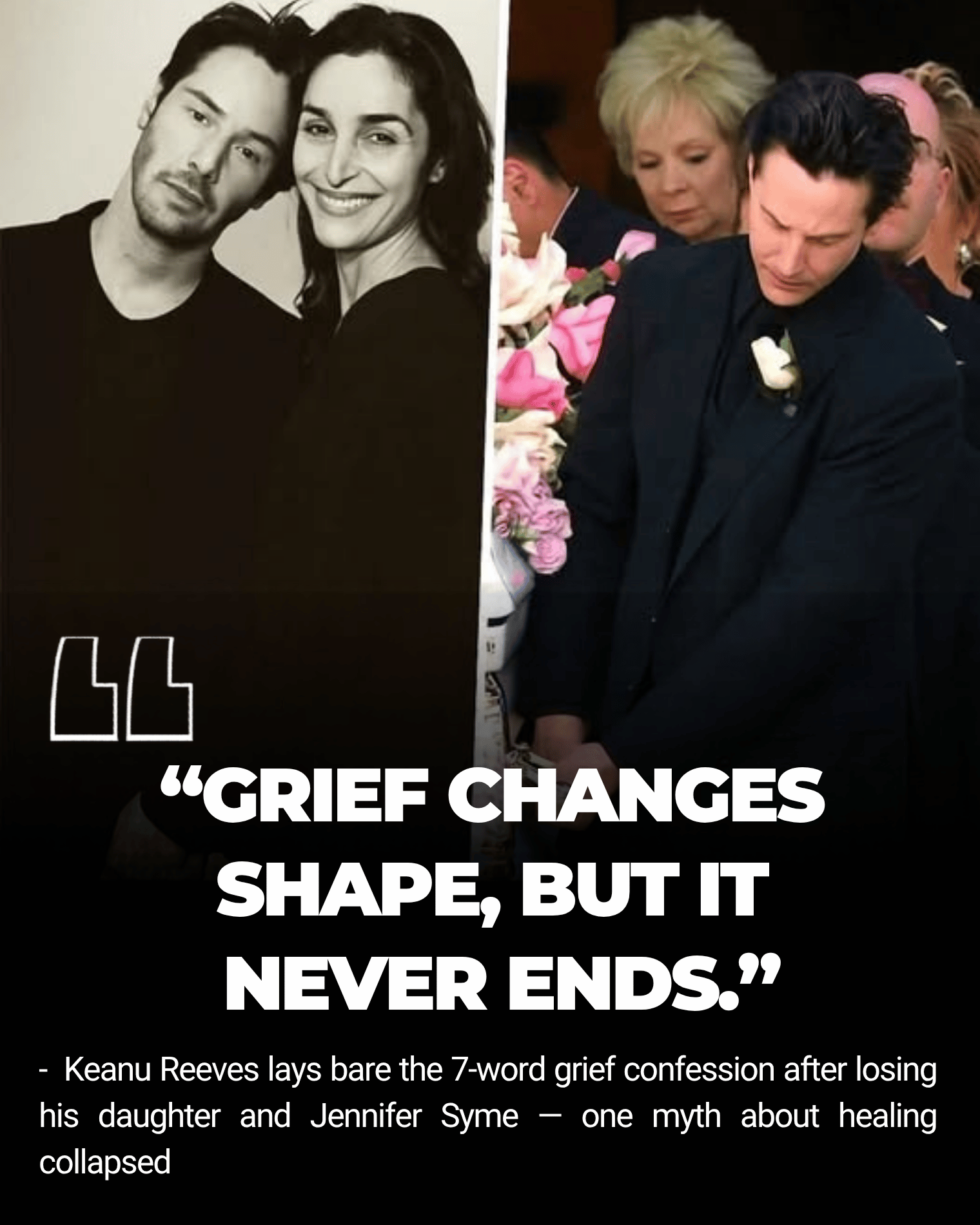

When Stephen Colbert asked Keanu Reeves a simple but deeply philosophical question about what he believes happens after we die, the actor delivered a response that resonated far beyond the moment itself. Instead of offering humor, speculation, or abstract theory, Reeves chose a grounded and profoundly human perspective that immediately shifted the tone of the conversation.
His answer focused not on the unknown, but on the emotional reality experienced by those who are left behind. Reeves said, “I know that the ones who love us will miss us.” In that brief statement, he reframed the question entirely, moving attention away from mystery and toward the lived experience of grief, memory, and love.
The simplicity of his response is what made it so powerful. Rather than attempting to define what cannot be known, Reeves acknowledged what is universally felt: the absence of someone who was deeply loved. In doing so, he gave voice to a part of grief that is often overlooked in public discussions—the ongoing emotional presence of those who remain after loss.
The moment quickly gained attention online, with many viewers describing it as one of the most sincere and grounding responses ever given in a late-night interview. In an environment often shaped by humor or spectacle, Reeves’ choice to speak plainly stood out for its emotional clarity and restraint.
What made the exchange especially meaningful was the way it honored grief without dramatizing it. Reeves did not frame death as a concept to be solved or explained, but as an experience that inevitably leaves an impact on the people who continue living. That perspective shifted the focus from fear or curiosity to empathy and remembrance.
For many, his words served as a quiet reminder that loss is not only about what is gone, but about the relationships that continue to exist in memory and feeling. The people who are loved do not simply disappear from the lives of others—they remain present through absence, shaping how those left behind continue forward.
Keanu Reeves’ answer ultimately resonated because of its humility. In just a few words, he avoided turning a profound question into performance, instead offering something deeply human. It was not an attempt to define the unknown, but to acknowledge the enduring connection between those who leave and those who stay.
In that simplicity, the moment became more than an interview answer. It became a reflection on love, loss, and the quiet truth that grief is, at its core, a testament to how deeply someone was cared for.